What's Really Happening While Your Pet Is Under Anesthesia
A closer look at modern veterinary anesthesia — and why the team behind the equipment matters just as much as the technology itself.
If outside the area, please call your nearest emergency vet.
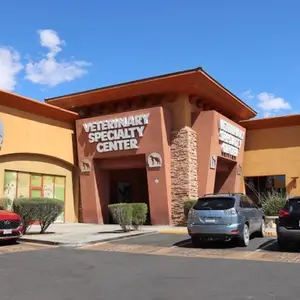
If you've ever handed your pet over for a procedure requiring anesthesia, you know the feeling. You sign the consent forms, someone carries your dog or cat through a door you don't go through, and then you wait. You trust that everything will be fine — but you don't really know what's happening on the other side of that door.
This article is about what's actually happening over there. And why, at a hospital with a board-certified anesthesiologist on staff, it looks quite different from what most pet owners imagine.
It's Not "Put them under and wait"
The most common misconception about veterinary anesthesia is that it's passive — that once a pet is sedated, the hard part is over and the team just monitors until the procedure is done.
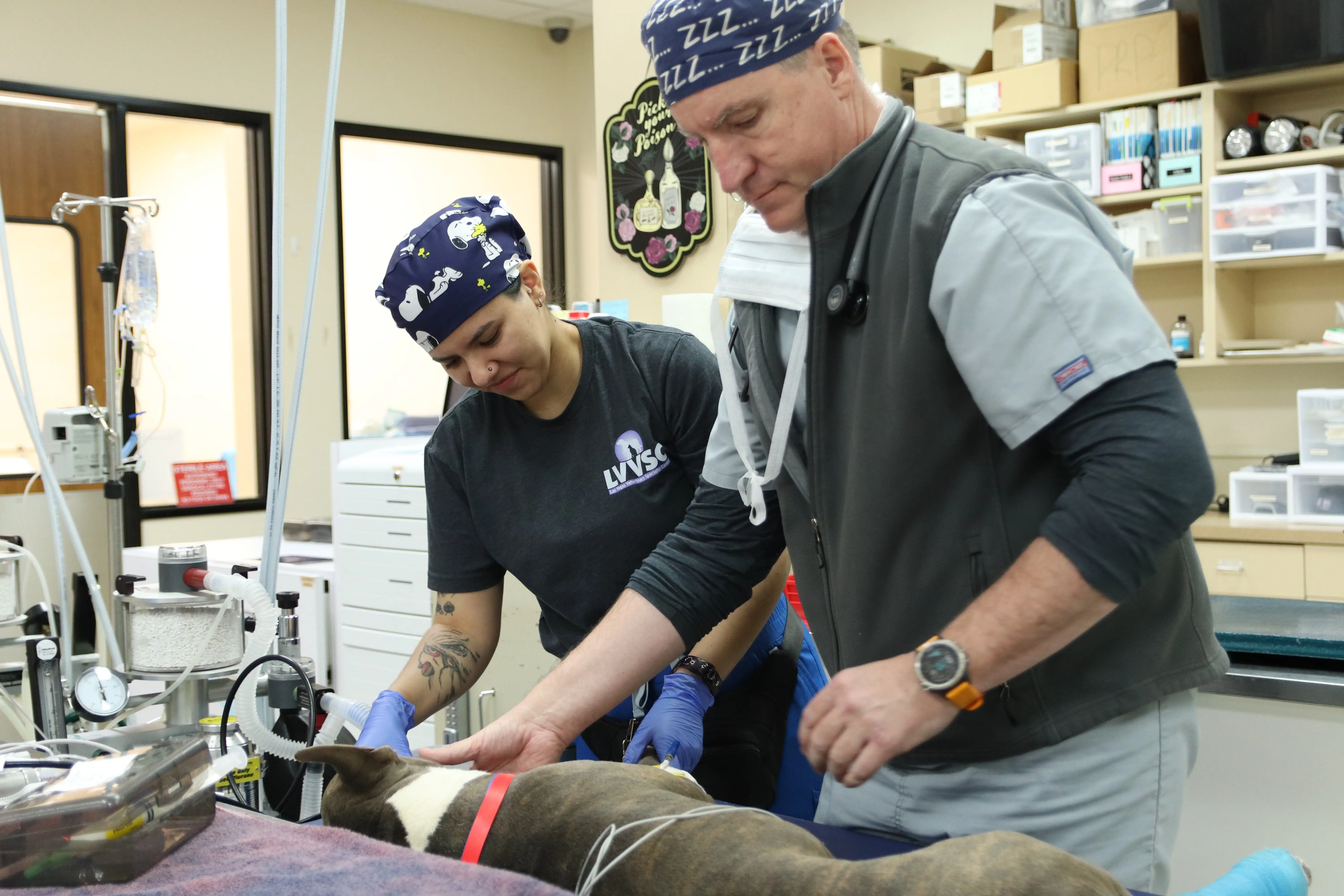
In reality, anesthesia is one of the most active, dynamic parts of any procedure. A patient under anesthesia can't tell you they're uncomfortable, that their heart rate is climbing, or that their blood pressure has dropped. The anesthesia team is their voice — and their safety net.
That means continuously tracking:
- Breathing rate and quality — Is the chest rising and falling properly? Is oxygen moving efficiently?
- Blood pressure — Drops can happen quickly and need immediate response
- Heart rate and rhythm — Arrhythmias can develop under anesthesia and require fast intervention
- Oxygen saturation — Via pulse oximetry, monitoring how well oxygen is being delivered to tissues
- Carbon dioxide levels — Capnography tracks how effectively the body is eliminating CO₂
- Body temperature — Anesthetized patients can lose heat rapidly, especially smaller animals
- Depth of anesthesia — Too light and the patient may respond to pain; too deep and vital systems are suppressed
Every one of these data points tells part of the story. The skill — and the training — is in reading all of them at once, understanding what they mean together, and knowing exactly what to do when something shifts.
How Veterinary Anesthesia Has Changed
It wasn't always this sophisticated.
In the early 1990s, basic veterinary practices often had no pulse oximetry at all. If a patient was breathing, the assumption was they were fine. ECG monitoring, when it existed, sometimes amounted to a box that made a beep — no waveform, no rhythm analysis, just a signal that the heart was beating.
Today, the standard of care in a well-equipped specialty hospital looks completely different. Advanced monitoring equipment, board-certified specialists, evidence-based protocols, and — critically — teams that understand what they're looking at and how to respond.
That last part matters more than most people realize.
The Difference Between Watching Numbers and Understanding Them
Technology can display data. It takes training and experience to interpret it.
This is at the heart of what a veterinary anesthesiologist does — and why the role exists as its own specialty. A board-certified anesthesiologist has completed veterinary school followed by a dedicated three-year residency focused entirely on anesthesia: the pharmacology of anesthetic drugs, the physiology of sedated patients, the management of complications, and the specific challenges posed by different species, breeds, and disease states.
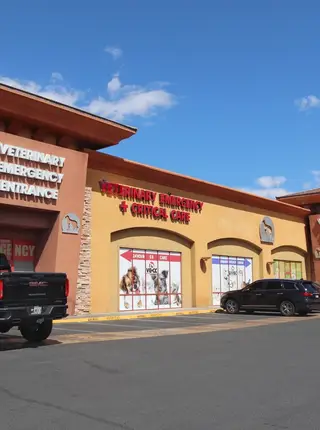
At Las Vegas Veterinary Specialty Center, that specialist is Dr. Jonathan Congdon. His approach centers on one core belief: the entire care team should understand why they're doing what they're doing — not just how.
"Anyone can turn on a vaporizer and a flow meter and hope for the best," he says. "My goal is to help people get from minimal understanding to whatever level of understanding they want."
That investment in team education has a direct impact on patient outcomes. When every technician in the room understands what a blood pressure trend means and what to do about it — not just how to write down the number — the patient is safer.
Your Questions Answered
Q: Is anesthesia dangerous for my pet?
For healthy pets under proper monitoring, the risk of a serious anesthetic complication is less than 1%. That number climbs with age, underlying health conditions, and the complexity of the procedure — which is exactly why individualized planning matters. A pet with heart disease requires a fundamentally different anesthesia protocol than a young, healthy dog coming in for a spay.
Q: What happens before my pet is sedated?
Before any anesthesia is administered, your pet receives a full physical examination. The anesthesia team reviews their medical history, current medications, bloodwork, and any known health conditions. For complex patients, Dr. Congdon reviews cases personally — often before the day's procedures begin — so the plan is in place before your pet ever enters the room.
Q: My pet has a heart condition / kidney disease / respiratory issues. Is anesthesia still safe?
This is one of the most important questions an owner can ask — and the honest answer is: it depends on careful preparation. Pets with chronic conditions are not automatically poor anesthesia candidates, but they require more specialized planning. A board-certified anesthesiologist has the training to assess those risks, modify protocols accordingly, and manage complications if they arise. At [Hospital Name], no case is turned away based on complexity alone.
Q: What does recovery look like?
Recovery from anesthesia is its own phase of care — not just waiting for the drugs to wear off. Your pet is monitored continuously as they return to consciousness, with attention to pain levels, breathing, temperature, and stability. Soft bedding, gentle handling, and proactive pain management are standard. The team doesn't consider the case finished until your pet is awake, stable, and comfortable.
Q: Can I call ahead if I have questions about my pet's anesthesia?
Yes — and you're encouraged to. If your pet has a complex medical history or you have specific concerns about an upcoming procedure, those conversations are welcome before the day of the procedure. The more the team knows in advance, the better prepared they can be.
What to Expect at Las Vegas Veterinary Specialty Center
When your pet comes in for a procedure requiring anesthesia, here's what the process looks like:
- Pre-procedure assessment — Full physical exam, medical history review, and individualized anesthesia planning
- Protocol development — A plan tailored to your pet's species, breed, age, temperament, and specific health considerations
- Continuous monitoring — Vital signs tracked in real time by a trained team throughout the procedure
- Immediate response capability — A board-certified anesthesiologist available to address complications if they arise
- Dedicated recovery monitoring — Attentive observation as your pet returns to consciousness, with pain management built in
The Bottom Line
Anesthesia is not a background function. It's an active, skilled, and constantly responsive discipline — and when it's done well, most pet owners never have reason to think about it because everything goes smoothly.
That's the goal: preparation thorough enough, and a team skilled enough, that your pet wakes up comfortably and you take them home without ever knowing how much was happening in that room.
The information contained in the article is for informational purposes only and is not intended to take the place of the advice of a veterinarian.